
Orthognathic Surgery
Orthognathic Surgery: Corrective Jaw Surgery for Bite and Jaw Problems
Orthognathic surgery is corrective jaw surgery. It repositions the upper jaw, the lower jaw, or both when braces alone can't correct your bite.
About the Service
How Jaw Surgery Works: Upper Jaw, Lower Jaw or Both
Orthognathic surgery is corrective jaw surgery. Tänder's surgeons plan it with your orthodontist and generally perform it in a hospital or surgical center.
When teeth don't come together properly, the cause can be the position or size of the jaws themselves, not just the teeth. Orthognathic surgery repositions the upper jaw, lower jaw, or both. It can improve chewing, speech clarity and jaw pain, and in some cases sleep-disordered breathing.
Orthognathic surgery is almost always done alongside orthodontic treatment. Your orthodontist aligns the teeth within each jaw before surgery. Your surgeon then repositions the jaws. Orthodontics after surgery fine-tunes the result. The combined timeline typically runs 18 to 24 months.
Both Tänder surgeons completed their OMS residency at the University of Iowa. Meet Dr. Pratt and Dr. Campbell.
Related care includes facial trauma surgery and wisdom tooth removal.
Looking for care in Arizona? Read about orthognathic surgery in Phoenix. You can also read about tooth extractions.
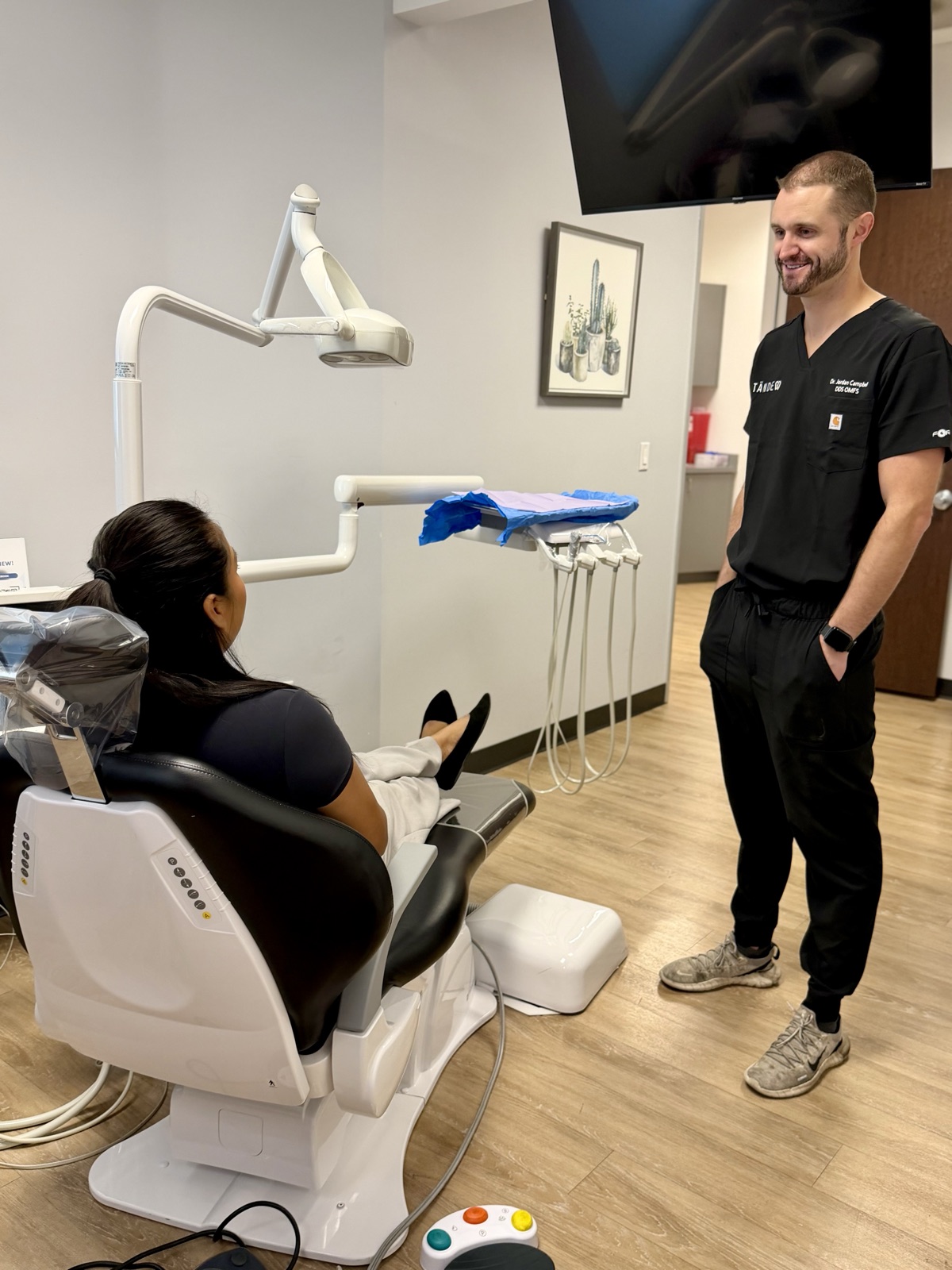
A Tänder surgeon talks with a patient before treatment.
Candidacy
Underbite, Overbite or Open Bite: Am I a Candidate for Jaw Surgery?
Whether you are a candidate depends on your health, your goals and your imaging. The list below shows common situations where patients ask about this care. A board-certified Tänder surgeon reviews your case at a free consultation and gives you an honest answer, with no obligation to move forward.
- Significant underbite — lower jaw protrudes beyond upper jaw
- Significant overbite or open bite orthodontics couldn't correct
- Facial asymmetry caused by uneven jaw growth
- Chronic jaw pain, clicking, or difficulty chewing related to skeletal imbalance
- Sleep apnea or airway obstruction partially attributable to jaw position
Why Tänder
Why Choose Tänder?
Tänder's board-certified oral and maxillofacial surgeons plan your jaw surgery with your orthodontist and your dentist, and perform it in a hospital or surgical center. Here are three reasons patients choose us, from the surgeons' training to how your own dental team stays involved.
Collaborative With Your Orthodontist
We coordinate directly with your orthodontist throughout the combined treatment timeline.
Board-Certified Surgical Training
Hospital-based residency training in the full scope of orthognathic procedures.
Planned With Your Dental Team
Jaw surgery is planned with your dentist and orthodontist and performed in the appropriate surgical setting.
Cost & Financing
Jaw Surgery Cost & Insurance
Insurance: When medically indicated for functional reasons, orthognathic surgery may be covered by medical insurance. Coverage varies by plan. Our team can assist with documentation.
Treatment timeline cost: Cost varies based on case complexity and the combined orthodontic/surgical plan — discussed at consultation.
We work with leading financing partners, including CareCredit and Sunbit, to help make treatment accessible — ask about current plans and monthly payment examples at your free consultation.
Recovery
Jaw Surgery Recovery: What to Expect
| When | What to expect |
|---|---|
| 2–4 Weeks | Most patients return to desk work and light activity on a soft diet. |
| 3–6 Months | Full bone healing and resolution of swelling, though most patients feel normal well before that. |
| 18–24 Months | The full combined orthodontic and surgical timeline from start to finish. |

Coordinated Care
Expert Jaw Surgery — Planned With Your Dental Team
Board-certified surgeons who plan your jaw surgery with your orthodontist and your dentist. Jaw surgery is generally done in a hospital or surgical center.
FAQ
Orthognathic Surgery — Frequently Asked Questions
Most patients return to light activity within two to four weeks; full healing takes three to six months.
When medically indicated for functional reasons, jaw surgery may be covered by medical insurance. Coverage varies by plan. Our team can assist with documentation.
Your orthodontist and a board-certified Tänder oral surgeon plan your treatment together. We coordinate directly with your orthodontist throughout. Bring any questions about your orthodontic plan to your free consultation. Our surgeon will talk through how the orthodontic and surgical steps fit together.
In most cases, yes — pre- and post-surgical orthodontics are part of the typical 18–24 month timeline.
In some patients, jaw advancement can improve airway dimensions, evaluated with your sleep medicine provider.
Jaw surgery is planned with your dentist and orthodontist. It is generally done in a hospital or surgical center, not at a partner dental office. Start with a consultation at a partner practice. Our locations page shows where we currently operate.
Is Jaw Surgery Right for You? Let's Find Out Together.
A free consultation with our surgeons is the right next step. There is no pressure and no obligation.